


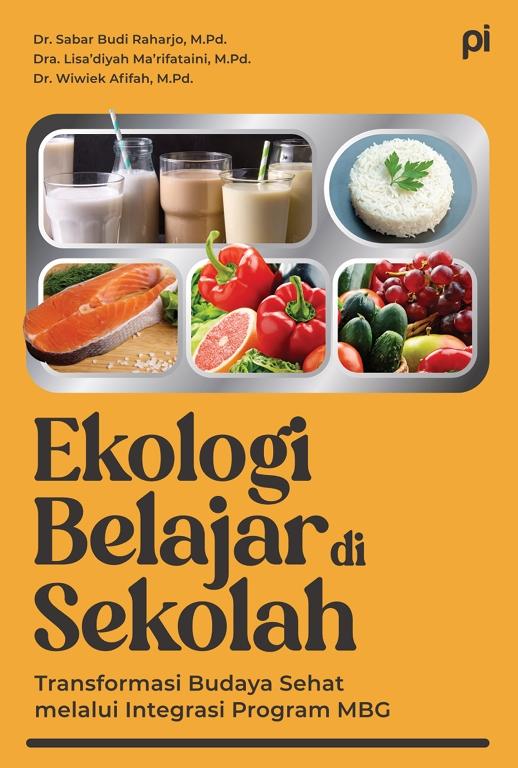
Buku Ekologi Belajar di Sekolah: Transformasi Budaya Sehat melalui Integrasi Program MBG membahas pentingnya integrasi Program Makan Bergizi Gratis (MBG) dalam membangun ekologi belajar yang sehat, inklusif, dan berkelanjutan di lingkungan sekolah. Buku ini mengkaji keterkaitan antara nutrisi, lingkungan belajar, interaksi sosial, serta pemanfaatan teknologi kecerdasan artifisial berbasis AI-NLP dalam mendukung transformasi budaya sehat di dunia pendidikan. Melalui pendekatan interdisipliner, penulis menyoroti berbagai tantangan implementasi MBG, mulai dari persoalan gizi, distribusi, komunikasi publik, hingga pembentukan karakter dan pola pikir transformatif siswa. Selain itu, buku ini menawarkan strategi praktis bagi sekolah, keluarga, dan pemangku kebijakan dalam menciptakan generasi unggul menuju Indonesia Emas 2045 melalui penguatan literasi gizi, budaya sehat, dan ekosistem pendidikan yang humanis serta berbasis dat
Ajzen, I. (2022). The theory of planned behavior: Frequently asked questions. Human Behavior and Emerging Technologies.
Badan Pusat Statistik. (2024). Indeks Pembangunan Manusia Indonesia 2023. Jakarta: BPS.
Badan Pusat Statistik. (2025). Indeks Pembangunan Manusia Indonesia: Analisis Tren dan Proyeksi Strategis. Jakarta: BPS.
Bandura, A. (1977). Social Learning Theory. Englewood Cliffs, NJ: Prentice-Hall.
Bandura, A. (1986). Social foundations of thought and action: A social cognitive theory. Prentice-Hall.
Bandura, A. (1997). Self-Efficacy: The Exercise of Control. New York: W.H. Freeman and Company.
Bickmore, T. W., Trinh, H., Olafsson, S., O’Leary, T. K., Asadi, R., Rickles, N. M., & Cruz, R. (2018). Patient and consumer safety risks when using conversational assistants for medical information: An observational study of Siri, Alexa, and Google Assistant. Journal of Medical Internet Research, 20(9), e11510
Birch, L. L. (1999). Development of food preferences. Annual Review of Nutrition, 19, 41–62.
Black, R. E., Victora, C. G., Walker, S. P., et al. (2013). Maternal and child undernutrition and overweight in low-income and middle-income countries. The Lancet, 382(9890), 427–451.
Bransford, J. D., Brown, A. L., & Cocking, R. R. (2000). How people learn: Brain, mind, experience, and school. National Academy Press.
Braveman, P., & Gruskin, S. (2003). Defining equity in health. Journal of Epidemiology & Community Health, 57(4), 254–258. https://doi.org/10.1136/jech.57.4.254
Bronfenbrenner, U. (1979). The Ecology of Human Development: Experiments by Nature and Design. Cambridge: Harvard University Press.
Bundy, D. A. P., de Silva, N., Horton, S., Jamison, D. T., & Patton, G. C. (2018). Disease control priorities (3rd ed.): Volume 8, child and adolescent health and development. Washington, DC: World Bank.
Contento, I. R. (2016). Nutrition education: Linking research, theory, and practice (3rd ed.). Jones & Bartlett Learning.
Damayanti, R., Sumantri, M. S., & Dhieni, N. (2021). Guru sebagai agent of change dalam pendidikan anak. Jurnal Obsesi.
Deci, E. L., & Ryan, R. M. (2000). The “what” and “why” of goal pursuits: Human needs and the self-determination of behavior. Psychological Inquiry, 11(4), 227–268.
Dewey, J. (1938). Experience and education. New York, NY: Macmillan.

This work is licensed under a Creative Commons Attribution-NonCommercial-ShareAlike 4.0 International License.


