


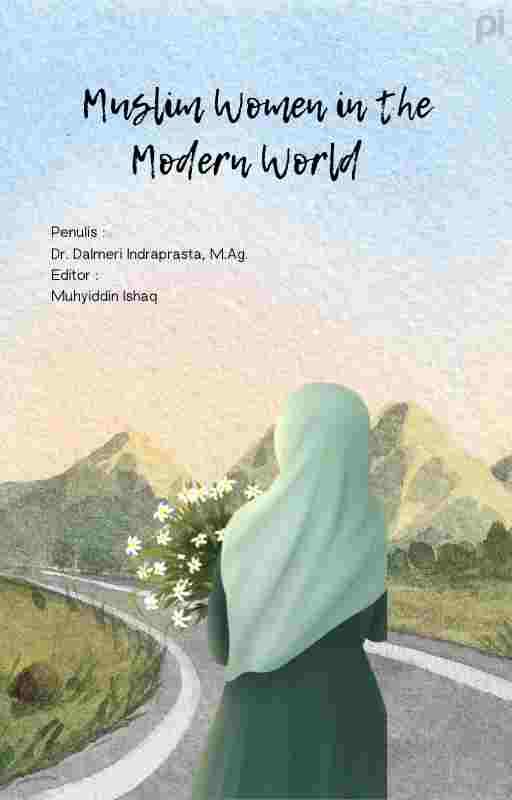
Muslim women around the world have long been the subject of stereotypes and misunderstandings. They are often viewed as victims of patriarchy and fundamentalism, lacking agency and autonomy in their lives. However, the reality is far more complex and diverse. In this book, we explore the identities, struggles, and progress of Muslim women in the modern world, focusing on their experiences across various cultural, social, and political contexts.
We discuss how Muslim women navigate their identities amid globalization, modernization, and social change. We also analyze how they confront challenges such as discrimination, violence, and marginalization, as well as how they advocate for their rights and build more inclusive and just communities.
This book aims to provide a more accurate and nuanced portrayal of the lives of Muslim women in the modern world, and to promote greater understanding and solidarity between Muslim and non-Muslim women. We hope this book will serve as a valuable resource for scholars, activists, and anyone seeking a deeper understanding of the experiences of Muslim women in today’s world.
An-Nahlawi, A. (2010). Principles of Islamic education in the family,
school and society. Jakarta: Gema Insani.
Anwar, S. (2021). Psychology of Islamic education: Theory and
application in learning and parenting. Jakarta: Rajawali Press.
APJII (Association of Indonesian Internet Service Providers). (2023).
Indonesia internet penetration survey report 2023. Jakarta:
APJII.
Central Bureau of Statistics (BPS). (2023). Indonesia gender statistics
Jakarta: BPS.
Fitriani, N. (2020). Islamic parenting in shaping children’s character.
Journal of Islamic Education, 8(2), 123-135. https://doi.org/[if
DOI exists].
Hasanah, U. (2022). Islamic Psychology-based child character
education in the digital era. Hayula: Indonesian Journal of
Multidisciplinary Islamic Studies, 6(3), 301-317. https://doi.
org/[if there is a DOI]
Ministry of Education, Culture, Research and Technology
(Kemdikbud). (2022). Curriculum policy and strengthening
character education in Indonesia. Jakarta: Kemdikbud.
Mutiah, D. (2018). Islamic parenting and children’s resilience to the
impact of digital media. Journal of Islamic Psychology, 6(1), 45
https://doi.org/[if there is a DOI]
Rahman, A., & Putri, R. (2022). Integration of Islamic Psychology in
family education. Journal of Islamic Education Science, 10(1),
-79. https://doi.org/[if available DOI]
Sarwono, S. W., & Meinarno, E. A. (2019). Social psychology. Jakarta:
Salemba Humanika.
Setiadi, E. (2020). Social change and its impact on family structure in
Indonesia. Yogyakarta: Student Library.
Sutoyo, A. (2013). Islamic Psychology: Integration of psychology and
Islamic values. Jakarta: Rajawali Press.
World Health Organization (WHO). (2021). Maternal mental health
and parenting stress: Global report. Geneva: WHO Press

This work is licensed under a Creative Commons Attribution-NonCommercial-ShareAlike 4.0 International License.


