


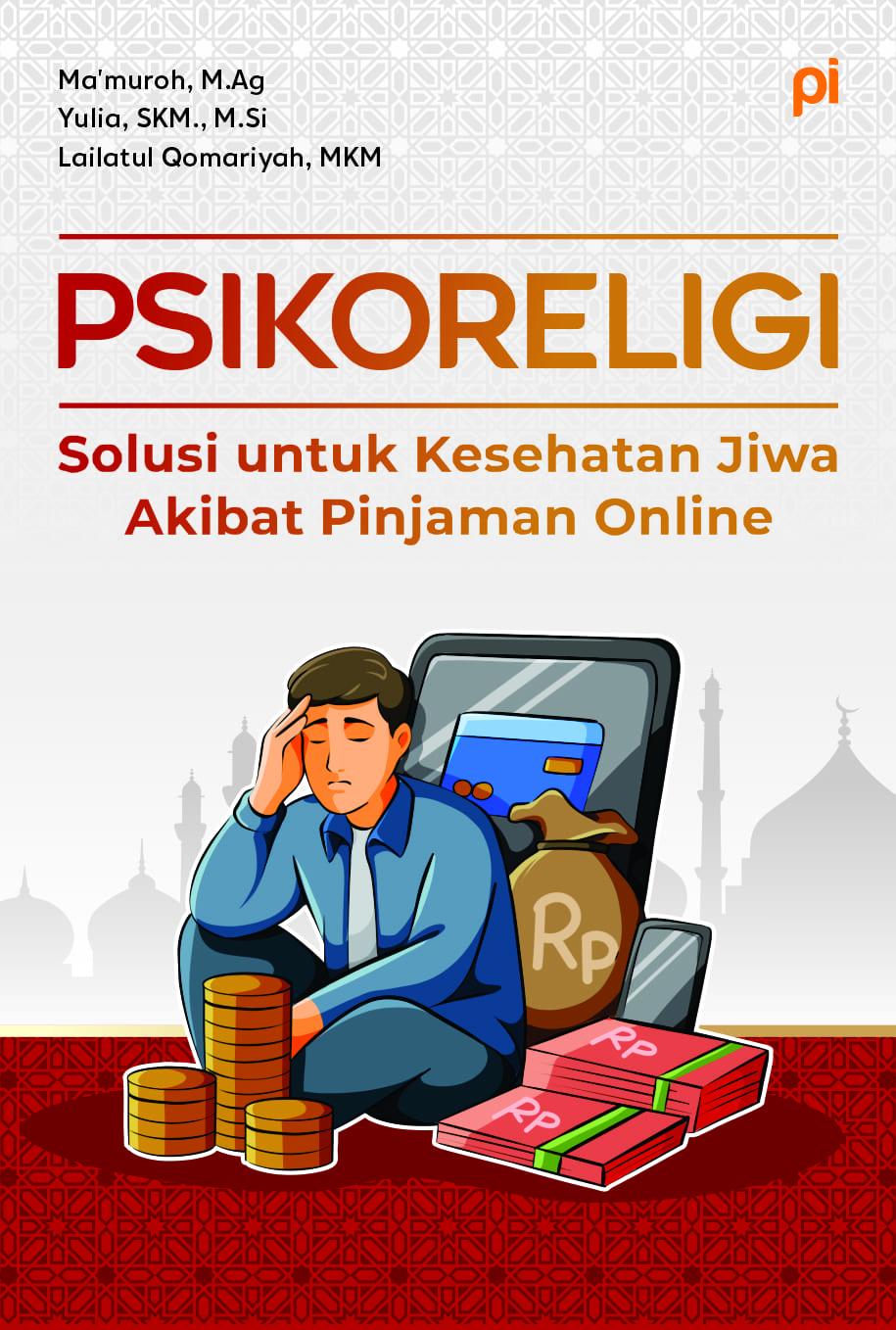
Buku ini membahas secara komprehensif peran psikoreligi dalam menurunkan tingkat depresi, mengatasi gangguan mental, dan mencegah perilaku bunuh diri pada individu yang terjerat pinjaman online. Fenomena pinjaman online tidak hanya berdampak pada aspek ekonomi, tetapi juga menimbulkan tekanan psikologis yang serius, seperti kecemasan, stres, hingga keinginan mengakhiri hidup. Melalui pendekatan psikoreligi, yaitu integrasi nilai-nilai spiritual dengan metode psikologis, buku ini menguraikan strategi penyembuhan yang menekankan pada kekuatan iman, doa, dzikir, dan bimbingan keagamaan sebagai sarana terapi. Kajian teoritis dipadukan dengan hasil penelitian lapangan sehingga menghasilkan perspektif ilmiah sekaligus praktis dalam penerapan psikoreligi. Dengan demikian, buku ini menjadi rujukan penting bagi akademisi, praktisi kesehatan mental, konselor, serta masyarakat luas yang mencari solusi alternatif dalam menghadapi permasalahan psikologis akibat jeratan pinjaman online.
psychopathology in childhood and adolescence: A meta-analysis and narrative review. Psychological Bulletin, 143(9), 939–991. https://doi.org/10.1037/bul0000110
● Corrigan, P. W., & Watson, A. C. (2002). Understanding the impact of stigma on people with mental illness. World Psychiatry, 1(1), 16–20.
● Costello, E. J., Egger, H., & Angold, A. (2008). The developmental epidemiology of anxiety disorders: Phenomenology, prevalence, and comorbidity. Child and Adolescent Psychiatric Clinics of North America, 17(1), 71-89. https://doi.org/10.1016/j.chc.2007.09.006
● Cuijpers, P., Sijbrandij, M., Koole, S. L., Andersson, G., Beekman, A. T., & Reynolds, C. F. (2014). Adding psychotherapy to antidepressant medication in depression and anxiety disorders: a meta-analysis. World Psychiatry, 13(1), 56–67. https://doi.org/10.1002/wps.20089
● Diener, E., Tay, L., & Myers, D. G. (2011). The religion paradox: If religion makes people happy, why are so many dropping out? Journal of Personality and Social Psychology, 101(6), 1278–1290. https://doi.org/10.1037/a0024402
● Dimidjian, S., Hollon, S. D., Dobson, K. S., Schmaling, K. B., Kohlenberg, R. J., Addis, M. E., ... & Jacobson, N. S. (2011). Randomized trial of behavioral activation, cognitive therapy, and antidepressant medication in the acute treatment of adults with major depression. Journal of Consulting and Clinical Psychology, 79(5), 654-667. https://doi.org/10.1037/a0024888
● Doufesh, H., Ibrahim, F., Ismail, N. A., & Ahmad, W. A. W. (2014). Effect of Muslim prayer (Salat) on α electroencephalography and its relationship with autonomic nervous system activity. The Journal of Alternative and Complementary Medicine, 20(7), 558-562. https://doi.org/10.1089/acm.2013.0282
● Fava, M., Rush, A. J., Alpert, J. E., Balasubramani, G. K., Wisniewski, S. R., Carmin, C. N., ... & Trivedi, M. H. (2008). Difference in treatment outcome in outpatients with anxious versus nonanxious depression: a STAR*D report. American Journal of Psychiatry, 165(3), 342–351. https://doi.org/10.1176/appi.ajp.2007.07071113
● Firth, J., Solmi, M., Wootton, R. E., Vancampfort, D., Schuch, F. B., Hoare, E., ... & Sarris, J. (2020). A meta-review of “lifestyle psychiatry”: the role of exercise, diet, and sleep. World Psychiatry, 19(3), 360–380. https://doi.org/10.1002/wps.20773
● Fischer, A. R., Jome, L. M., & Atkinson, D. R. (2018). Reconceptualizing multicultural counseling: Universal healing conditions in a culturally specific context

This work is licensed under a Creative Commons Attribution-NonCommercial-ShareAlike 4.0 International License.


