


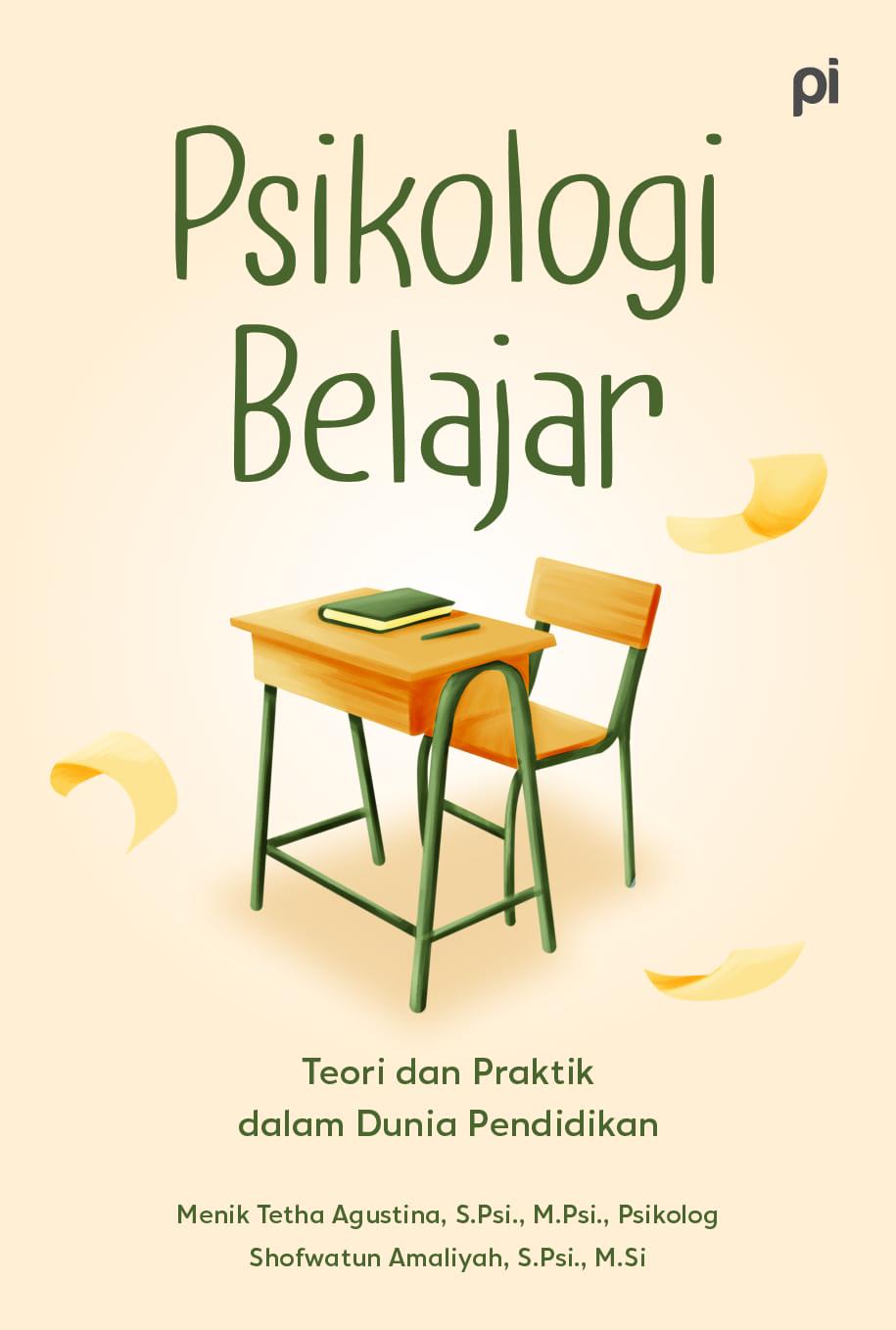
Buku Psikologi Belajar: Teori dan Praktik dalam Dunia Pendidikan menyajikan pemahaman komprehensif tentang bagaimana proses belajar terjadi pada individu dari sudut pandang psikologi. Buku ini mengulas beragam teori belajar klasik hingga modern—seperti behaviorisme, kognitivisme, humanistik, dan konstruktivisme—beserta aplikasinya dalam praktik pendidikan. Di dalamnya juga dibahas faktor-faktor internal dan eksternal yang memengaruhi belajar, seperti motivasi, emosi, perkembangan kognitif, serta lingkungan sosial dan teknologi. Selain itu, buku ini menyoroti pentingnya pendekatan yang berpusat pada peserta didik dengan mempertimbangkan perbedaan gaya belajar, kesehatan mental, serta kondisi sosial-budaya. Melalui pendekatan teoritis dan praktis, buku ini menjadi rujukan penting bagi guru, mahasiswa, praktisi pendidikan, dan siapa saja yang ingin meningkatkan efektivitas proses pembelajaran demi mendukung tumbuh kembang peserta didik secara optimal.
Akçayır, M., & Akçayır, G. (2017). Advantages and challenges associated with augmented
reality for education: A systematic review of the literature. Educational Research Review, 20, 1–11.
Almalki, G., & Williams, N. (2022). Integrating technology in education: Best practices and
challenges. Education and Information Technologies, 27(3), 453–470.
American Psychiatric Association. (2022). Diagnostic and Statistical Manual of Mental
Disorders, Fifth Edition, Text Revision (DSM-5-TR). American Psychiatric Publishing.
Aslaksen, F., & Lorås, H. (2019). The learning styles neuromyth is still thriving in medical
education. Frontiers in Human Neuroscience, 13, 113.
Bacca, J., Baldiris, S., Fabregat, R., Graf, S., & Kinshuk. (2014). Augmented reality trends
in education: A systematic review of research and applications. Educational Technology & Society, 17(4), 133–149.
Baddeley, A. D. (2019). Working Memory and Language. Psychology Press.
Banks, J. A., & Banks, C. A. M. (2019). Multicultural Education: Issues and Perspectives
(10th ed.). Wiley.
Berninger, V. W., & Wolf, B. J. (2016). Teaching Students with Dyslexia and Dysgraphia:
Lessons from Teaching and Science. Brookes Publishing.
Black, P., & Wiliam, D. (2009). Developing the theory of formative assessment.
Educational Assessment, Evaluation and Accountability, 21(1), 5–31.
Bower, G. H. (2018). Mental imagery and memory. American Psychologist, 33(5), 367
Buckley, P., & Doyle, E. (2017). Gamification and student motivation. Interactive Learning
Environments, 25(7), 1097–1114.
Butterworth, B., Varma, S., & Laurillard, D. (2011). Dyscalculia: From brain to education.
Science, 332(6033), 1049–1053.
CAST. (2018). Universal Design for Learning Guidelines version 2.2. CAST.
Cepeda, N. J., Pashler, H., Vul, E., Wixted, J. T., & Rohrer, D. (2006). Distributed practice
in verbal recall tasks: A review and quantitative synthesis. Psychological Bulletin, 132(3), 354–380.
Cirillo, F. (2018). The Pomodoro Technique: The Life-Changing Time-Management
System. Currency.
Coffield, F., Moseley, D., Hall, E., & Ecclestone, K. (2004). Learning styles and pedagogy
in post-16 learning: A systematic and critical review. Learning and Skills Research Centre. Link: https://dera.ioe.ac.uk/5829/1/learning_styles.pdf
Cuevas, J. (2015). Is learning styles-based instruction effective? A comprehensive
analysis of recent research. Journal of Educational Psychology, 107(2), 378–399.
Depdiknas. (2008). Standar Nasional Pendidikan. Jakarta: Departemen Pendidikan

This work is licensed under a Creative Commons Attribution-NonCommercial-ShareAlike 4.0 International License.


